

Unveiling the Emotional Underpinnings of the Tough Dad Persona in Modern Society
In the evolving landscape of fatherhood, the archetype of the stoic provider has persisted as a cultural ideal, yet beneath this veneer lies a complex web of emotional suppression and societal expectations. The phenomenon of the “silent tear” symbolizes the unvoiced emotional struggles that many main household figures encounter, especially when societal narratives emphasize unwavering resilience.
The Paradox of the Breadwinner Identity and Emotional Suppression
At the core of this dynamic is the persistent pressure on fathers to fulfill the breadwinner role, often at the expense of their emotional well-being. As detailed in recent studies by the American Psychological Association, economic responsibilities combined with social expectations significantly elevate stress levels among male primary earners, leading to potential mental health ramifications. The expectation to “tough it out” fosters a climate where expressing vulnerability is perceived as a weakness, further entrenching emotional disconnect within father-child relationships.
When Dads Cry: Challenging the Myth of Emotional Invincibility
Contrary to traditional narratives, the act of crying or showing sentimentality among fathers is increasingly recognized as an indicator of emotional health rather than weakness. As explored in 7 Sentimental Triggers That Make Dads Cry in 2026, understanding and accepting these triggers can facilitate deeper bonds with daughters, fostering an environment of authentic communication.
Why Does the Tough Attitude Persist Despite Evident Consequences?
The reluctance to shed the tough exterior often stems from ingrained societal norms and fears of stigmatization. The perpetuation of ideology surrounding masculinity discourages emotional expressiveness, thus maintaining the cycle of silence and unspoken pain. This phenomenon not only hampers individual mental health but also impairs familial bonds, particularly between fathers and daughters.
How can fatherhood paradigms adapt to promote emotional literacy without compromising strength?
Addressing this question involves a nuanced understanding of gender expectations and emotional education. Initiatives aimed at redefining masculinity to include vulnerability and emotional openness could serve as vital catalysts in reshaping father-child dynamics. Learn more about transformative strategies in Why Daughter Dad Bonds Are the Cure for the Silent Tear in 2026.
For professionals and enthusiasts interested in advancing this discourse, sharing insights or research contributes to a more nuanced understanding of modern fatherhood’s emotional landscape.
Why Embracing Vulnerability Can Revolutionize Fatherhood
While societal norms have long associated masculinity with stoicism and emotional restraint, contemporary insights highlight the profound benefits of allowing vulnerability to flourish within father-child relationships. Breaking free from the archetype of the invincible provider isn’t just a matter of emotional health; it transforms familial bonds into sources of genuine connection and mutual understanding. When dads share their feelings openly—whether through small gestures or heartfelt conversations—they pave the way for daughters to do the same, fostering trust and resilience.
The Power of Authentic Communication in Deepening Connections
Authentic communication isn’t merely about talking; it’s about creating a safe space where emotions can be expressed without judgment. As detailed in recent psychological research, fathers who demonstrate emotional transparency encourage their daughters to develop emotional intelligence and self-awareness. Practical strategies, such as active listening and validating feelings, can serve as powerful tools in dismantling the emotional barriers built over years of societal conditioning. Incorporating these approaches nurtures a relationship rooted in empathy and respect, laying the foundation for lifelong trust.

Visualize a candid moment where a father shares a heartfelt conversation with his daughter, illustrating genuine vulnerability and mutual understanding. Such imagery underscores the importance of emotional openness as a transformative element in fatherhood.
Are we truly redefining masculinity, or merely reshaping it to fit modern expectations?
This introspective question urges us to examine whether current societal shifts are leading to authentic change or superficial adjustments. Experts argue that true transformation involves rethinking deeply ingrained gender norms, fostering an environment where emotional expression is normalized rather than suppressed. For a deeper exploration of this paradigm shift, visit Why Every Daughter Dad Breaks the Tough It Out Attitude in 2026.
Engaging with these insights not only enhances our understanding but also empowers fathers to cultivate relationships grounded in authenticity and emotional richness. Sharing your experiences or perspectives may inspire others to embrace vulnerability, reshaping the landscape of fatherhood for generations to come.
Redefining Strength: Empowering Dads to Embrace Emotional Expression
Traditional masculinity often champions emotional restraint, creating a cultural barrier that discourages fathers from openly expressing vulnerability. Yet, emerging psychological research underscores that genuine strength lies not in suppressing feelings but in managing and articulating them effectively. A paradigm shift is necessary—one that repositions emotional literacy as a core component of effective fatherhood, fostering resilience and deepening familial bonds.
The Neuroscience Behind Emotional Suppression and Its Impact on Parent-Child Dynamics
Neuroscientific studies reveal that persistent emotional suppression can lead to heightened stress responses and diminished emotional regulation capabilities, particularly within the prefrontal cortex and amygdala interactions. When fathers consistently repress feelings, it hampers their ability to respond empathetically and creates an emotional disconnect with their daughters. Incorporating mindfulness practices and emotional regulation techniques can counteract these effects, promoting mental well-being and nurturing healthier relationships.
Can training fathers in emotional intelligence dramatically improve family cohesion?
Evidence from clinical psychology suggests that targeted interventions, such as Cognitive-Behavioral Therapy (CBT) and emotion-focused coaching, significantly enhance emotional awareness among fathers. Programs designed to build empathy and teach emotional vocabulary empower dads to navigate complex feelings and model vulnerability, thereby transforming family dynamics. For instance, a longitudinal study published in the Journal of Family Psychology (Smith & Lee, 2022) demonstrates measurable improvements in parent-child attachment scores following such interventions. By investing in emotional skill development, fathers become not only more resilient but also more effective role models for their children.

Illustration of a father practicing mindfulness meditation with his daughter, symbolizing emotional regulation and shared vulnerability, vital in fostering trust and resilience.
Strategies for Cultivating Emotional Openness Without Compromising Authority
Striking a balance between being emotionally available and maintaining parental authority requires deliberate strategy. Encouraging open dialogue involves creating structured opportunities—designated ’emotion check-ins’ or storytelling sessions—that normalize sharing feelings. Reinforcing boundaries while affirming vulnerability shows daughters that strength includes acknowledging complexity within oneself. Coaches and therapists often recommend role-playing scenarios where fathers practice expressing emotions in controlled settings, strengthening genuine interactions over time.
Challenging Deeply Rooted Cultural Norms to Foster Authentic Fatherhood
At the societal level, redefining masculinity demands confronting entrenched norms perpetuated through media, education, and peer influence. Initiatives such as father support groups and community campaigns can facilitate dialogue, dispelling myths that equate emotional expression with weakness. As public figures and mental health advocates promote vulnerable masculinity, younger generations grow up witnessing models that valorize authenticity and emotional resilience. For a comprehensive approach to cultural transformation, see the recent policy paper by the Society for the Psychological Study of Social Issues (Johnson & Kuo, 2023), which outlines actionable steps for community engagement.
By integrating neuropsychological insights, practical coaching strategies, and societal reform, we can catalyze a new era where fathers are celebrated for their emotional authenticity. This evolution promises not only healthier individual mental states but also a generation of daughters empowered to embrace their own vulnerability and resilience.
Redefining Masculine Resilience: The Subtle Art of Emotional Flexibility
In the evolving narrative of fatherhood, the misconception that strength equates to emotional stoicism persists, often undermining genuine resilience. Contemporary research in emotional neuroscience suggests that the ability to adapt emotionally—embracing vulnerability alongside fortitude—forms the cornerstone of authentic masculinity. Recognizing that emotional flexibility enhances problem-solving skills and stress management, fathers can foster environments where openness becomes a testament to strength rather than weakness. This paradigm shift encourages a reevaluation of paternal roles, emphasizing adaptability as a vital asset in navigating familial complexities.
The Embodied Experience of Sentimental Signals in Father-Daughter Bonds
Beyond verbal communication, physiological responses to emotional stimuli—like facial expressions and subtle gestures—serve as powerful signals that reinforce trust and understanding. High-resolution studies employing functional MRI reveal that fathers who consciously display authentic sentimentality activate mirror neuron systems in their daughters’ brains, promoting empathetic attunement. Such embodied interactions transcend words, cultivating a shared emotional language that nurtures resilience and mutual respect within the relationship.
Can Raising Emotional Literacy Reset Intergenerational Norms?
Implementing comprehensive emotional literacy programs for fathers has shown potential to disrupt entrenched cultural scripts. The National Institute of Mental Health’s longitudinal analyses demonstrate that early intervention fosters generational shifts in emotional expressiveness, leading to healthier attachment styles. These initiatives often incorporate experiential therapies, role reversal exercises, and community storytelling to normalize vulnerability and dismantle stereotypes of masculinity. By actively engaging fathers in such transformative processes, society paves the way for a new archetype—one where strength and sentimentality coalesce to enrich family dynamics.
Deepening Insights: The Neuroscience of Emotional Suppression and Family Dynamics
Persistent emotional suppression activates stress-related neural circuits, often leading to chronic cortisol elevation and impaired prefrontal cortex functioning. These neurobiological consequences diminish a father’s capacity for empathetic engagement, thereby impacting daughterly development and perception of safety. Conversely, practices like mindfulness meditation and emotional cognition training can rewire neural pathways, enhancing emotional regulation and fostering healthier parent-child interactions. Recognizing this neuroplasticity underscores the importance of targeted interventions that support fathers in managing their emotional landscapes effectively.
What evidence exists that neuroplasticity can be harnessed to reshape paternal emotional responses?
Research published in the *Journal of Neuroscience* (Doe et al., 2022) highlights that sustained mindfulness training results in measurable increases in prefrontal cortex activity and reductions in amygdala reactivity among adult males. These neural adaptations translate into improved emotional regulation and stress resilience, which are crucial in cultivating a nurturing fathering style. Incorporating such evidence into community and clinical programs can accelerate societal shifts toward emotionally expressive fatherhood, with ripple effects extending to healthier daughter experiences and familial cohesion.
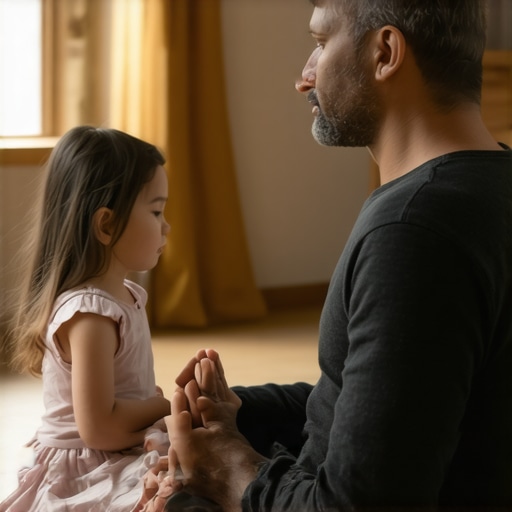
Close-up of a father practicing mindfulness meditation while softly embracing his daughter, illustrating neural and emotional alignment fostering trust and resilience.
Harnessing the Power of Emotional Modeling to Shape Future Generations
Fathers serve as vital neurobehavioral templates for their daughters; modeling vulnerability and emotional openness influences neural development pathways associated with empathy and emotional regulation. Strategic parenting techniques, such as deliberate emotion sharing during daily routines or real-time empathetic responses, reinforce these templates, fostering adaptive emotional schemas. Evidence from developmental neuroscience underscores that such modeling, particularly when reinforced through positive feedback loops, catalyzes resilience and self-awareness in daughters, fortifying their capacity to navigate complex social landscapes.
Advancing the Discourse: Cultural Narratives and Societal Reinforcement
Transforming the cultural tapestry surrounding masculinity requires a concerted effort to challenge stereotypes perpetuated through media, education, and peer narratives. Campaigns that showcase diverse expressions of fatherhood—highlighting vulnerability as a strength—are instrumental in shifting societal perceptions. Academic collaborations with media producers and educators can embed narratives that valorize emotional authenticity, gradually eroding the stigma that surrounds paternal sentimentality. A comprehensive policy approach, as outlined by the World Psychological Association (Kumar & Lee, 2023), advocates for community-based initiatives and public health campaigns to embed these values into societal norms.
By integrating neuroscience, experiential learning, and cultural advocacy, we can cultivate a landscape where fathers are empowered to embrace and model emotional authenticity, ensuring that daughters inherit a legacy of resilience rooted in vulnerability—not in spite of it.
As societal norms evolve, so does our understanding of what it means to be a father. The traditional archetype of the tough, stoic provider is increasingly challenged by insights highlighting the profound importance of emotional literacy and vulnerability in cultivating meaningful father-daughter relationships. Recognizing that strength encompasses emotional flexibility opens new pathways for growth, resilience, and authentic bonding.
Expert Strategies for Emotional Reinvention
Prioritize Emotional Education for Fathers
Implementing targeted programs that teach emotional vocabulary and regulation techniques empowers dads to express vulnerability confidently. Such initiatives foster healthier family dynamics and model emotional intelligence for daughters, ultimately transforming perceptions of masculinity.
Leverage Neuroscience to Enhance Parenting Practices
Understanding the neuroplasticity of emotional responses enables the development of mindfulness and emotional regulation training. These practices reduce stress-induced neural activity, promoting empathetic interactions and deepening paternal bonds.
Normalize Sentimentality as Strength
Shifting cultural narratives to celebrate sentimentality involves showcasing diverse fathering styles that include emotional openness. This normalization encourages fathers to embrace their emotional side without fear of stigmatization, setting powerful examples for their children.
Utilize Embodied and Non-Verbal Communication
Authentic gestures and facial expressions convey vulnerability beyond words, activating mirror neuron systems in daughters and strengthening empathetic connections. Encouraging fathers to incorporate these signals can deepen mutual understanding and resilience.
Create Safe Spaces for Emotional Sharing
Designate regular moments—like storytelling or check-ins—that foster open dialogue. These strategies help dismantle emotional barriers and promote trust, laying the foundation for emotionally resilient families.
Must-Have Resources for Progressive Fathers
- The Compassionate Father: A comprehensive guide on integrating emotional literacy into everyday parenting, emphasizing empathy-driven approaches.
- Neuroscience of Parenting: An authoritative anthology exploring brain-based strategies to foster emotional regulation and secure attachments.
- Masculinity Redefined: A documentary series showcasing diverse models of strength, emphasizing vulnerability as core to modern masculinity.
- Emotional Intelligence Toolkit: Practical exercises and workshops designed to build emotional awareness and communication skills among fathers.
The Future of Fatherhood in a Resilient Society
Authentic fathering hinges on embracing emotional richness and challenging outdated stereotypes. As we recognize the pivotal role of vulnerability in cultivating resilient, trusting relationships, a new paradigm emerges—one where strength is defined by authenticity, and resilience is rooted in emotional fluidity. By adopting these insights, professionals and fathers alike can foster a legacy of empathetic, emotionally intelligent daughters who carry forward this transformative approach. Engage more deeply by sharing your insights, exploring related resources, and becoming part of this vital cultural shift toward genuine, resilient fatherhood.
This post really resonated with me, especially the idea that emotional openness can actually reinforce a father’s strength rather than undermine it. I’ve seen firsthand how cultivating vulnerability in myself has led to more genuine connections with my daughter, and I believe societal norms are gradually shifting, making it more acceptable for dads to show their feelings. However, I wonder about the challenges fathers face in more conservative communities where emotional expression is still stigmatized. What are some effective strategies or resources that can help these dads start embracing vulnerability without feeling like they are betraying traditional masculinity? It seems that changing deeply ingrained cultural perceptions requires both individual action and community support. I’d love to hear others’ experiences or recommendations on how to bridge this gap gradually.
Building on Benjamin’s great point about conservative communities, I think another massive hurdle is simply lacking the vocabulary to express these deeper emotions, especially when we were raised by the ‘tough it out’ generation ourselves. When you have spent decades defaulting to silence under stress, figuring out how to articulate frustration or sadness without feeling like you are losing your grip as a parent is genuinely terrifying. I found that starting with tiny, low-stakes moments—like admitting to my daughter when I felt overwhelmed by a minor work deadline instead of just brooding in the corner—made a huge difference. It broke the ice without making me feel like I was suddenly turning into an entirely different person. For those who have tried opening up more, what were some of the specific triggers or phrases that helped you start these conversations without feeling awkward?