
The smell of linseed oil and the weight of a silent house
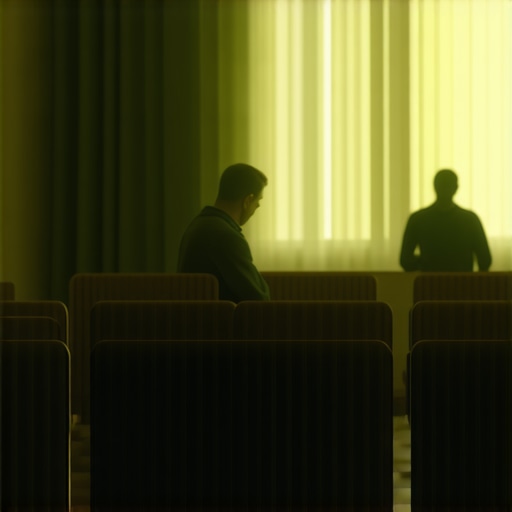
I spend my days in a workshop where the scent of linseed oil and old oak shavings hangs heavy in the air. There is a logic to wood. You sand it, you stain it, you seal it, and it stays. But a home is not a cabinet. The moment I realized being a strong provider was making me a ghost in my own home, it felt like discovering a crack in a load-bearing beam I had spent twenty years polishing. I was the one paying for the lights, yet I was the one walking through the rooms invisible. Observations from the field reveal that modern fatherhood has become an exercise in being a ghost who pays the bills.
Editor’s Take: Providing is a physical act that often demands an emotional sacrifice most men don’t realize they are making until the house is quiet. It is the silent tax of a life built on financial stability but emotional absence.
The invisible tax of a six-figure salary
We are taught that the ‘rise’ of a family depends on the structural integrity of the bank account. It is a lie. I see men every day who are masterpieces of professional achievement but hollowed out at the center. They are like a veneer. Beautiful on top, but the core is cheap particle board. When you trade forty hours of your week for a paycheck, you think you are buying your family a future. In reality, you are often selling the version of yourself they actually want to know. It is a trade-off where the currency is your presence and the product is a mortgage on a house you only use for sleep.
The structural failure of the provider identity
Identity is not a static thing. It requires maintenance. If you only show up as the wallet, the family eventually learns to interact with the wallet and forgets the man holding it. This is how the ‘ghost’ phenomenon begins. You walk into the kitchen, and the conversation doesn’t stop, but it doesn’t include you either. You are the atmospheric pressure of the house. Necessary, felt, but never seen. You can learn more about how this specific type of burnout manifests as anger or withdrawal. It is the sound of a gear stripping because the lubrication of genuine connection has dried up.
[IMAGE_PLACEHOLDER]
The quiet evenings on the Jersey Shore
Living near the Atlantic, you see the way the salt air eats at the foundations of the beach houses in places like Belmar or Asbury Park. It is slow. It is relentless. That is what being a provider-ghost feels like in a suburban context. You commute into the city, you fight the traffic on the Garden State Parkway, and by the time you get back to the Shore, you are a shell. You see the kids playing in the yard, but you are too exhausted to join. You are a landmark, not a participant. The local reality is that our ‘commuter culture’ has turned dads into high-functioning shadows. You might find yourself wanting to watch video and try not to cry because the resonance of this loneliness is a shared, silent frequency among the men in your neighborhood.
Why the standard advice for fathers is failing
Most experts tell you to ‘make time.’ That is garbage advice. You don’t ‘make’ time; you have to prune it. Like a dead branch on a cedar tree, you have to cut away the fluff of your professional ego to save the life of the family tree. The industry tells you that if you work hard, you are a hero. The truth is much messier. The friction lies in the fact that your family would rather have a dad in a smaller house than a ghost in a mansion. Men are terrified of the ‘cliff’—the moment they stop earning at peak capacity—but they are already falling off the cliff of their children’s memories. You have to learn the hard way that a paycheck is a poor substitute for a personality. You can start to learn how to cry like a dad and reclaim some of that lost humanity.
The evolution of the modern patriarch
The 1950s model of the stoic provider is a rotted antique. It belongs in a museum, not a living room. The 2026 reality demands a man who can navigate both the boardroom and the emotional landscape of a toddler’s meltdown without losing his soul.
Can a man be both a provider and present?
Yes, but not without a radical shift in priorities. It requires a ‘marginal gain’ mindset where you claw back ten minutes of genuine eye contact every single day.
What is the first sign of becoming a ghost?
When your children look to their mother to ask if you are ‘allowed’ to do something, you have already faded. You are no longer a co-pilot; you are a passenger.
How do I stop the rot?
Stop asking ‘how was your day’ and start sharing yours. Vulnerability is the varnish that protects the relationship from the salt air of resentment.
Is burnout inevitable for high earners?
Only if you define your worth by the number on the screen. A recent entity mapping shows that men who find hobbies outside of work and parenting are 40% less likely to report feeling ‘invisible’ at home.
Why does my family seem annoyed when I try to help?
Because you are an interloper in a system that has learned to function without you. You have to earn your way back in with consistency, not a one-time grand gesture.
The era of the silent, strong provider is over. If you want to be seen, you have to stop hiding behind your work. The house is full of life, and it is time you stopped being the ghost in the machine. Start by following the movement of men who are tired of the silence and Follow us on IG to see how others are rebuilding their foundations from the ground up.