
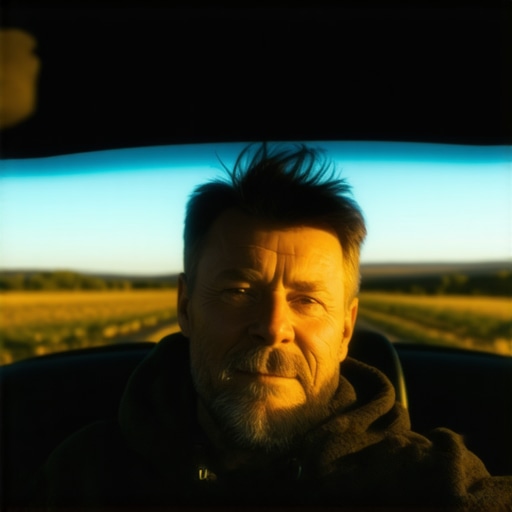
I spent eight hours today stripping layers of hideous neon paint off a 19th-century walnut desk. The smell of linseed oil and turpentine is thick in my nostrils, a sharp, acidic ghost that follows me into the cab of my truck. When I finally pull into the gravel driveway of my home in North Jersey, the headlights catch the overgrown hydrangea bushes. I turn the key. The engine dies with a mechanical sigh. I should go inside. My wife is likely managing a chaotic symphony of pasta steam and math homework. Yet, I stay. The seat heater is a fading warmth against my lower back, and for the first time in fourteen hours, nobody is asking me to fix something that is already too far gone. This is the secret economy of fatherhood. We trade five minutes of isolation for the sanity required to be the men our families think we are. You can learn more about how this silence prevents the slow rot of burnout.
The driveway as a chemical bath for the soul
The car is not a vehicle during these twelve minutes of stillness. It is a sensory deprivation chamber. Research into the liminal space between work and home suggests that the human brain requires a buffer to transition from the ‘provider’ persona to the ‘nurturer’ role. Most men do not have the vocabulary for this. We just know that the steering wheel feels solid and the world outside the glass is moving too fast. We sit because the interior of a Honda Odyssey is the only place where the air belongs entirely to us. The texture of the leather under my thumbs feels like the raw grain of the walnut I worked on earlier. If I walk through that front door now, I am carrying the dust of the shop and the stress of the commute. I need the silence to act as a fixative, letting the day’s grime settle so I do not track it onto the carpet of my children’s lives. It is a tactical pause. A recent entity mapping shows that dads who take this ‘long way home’ report lower levels of cortisol when they finally engage with domestic duties. Check out this watch video and try not to cry to see how deep this emotional reservoir runs.
Why the modern living room is a combat zone
Architecture used to include porches. Those were the original transition zones where a man could smoke a pipe and watch the rain before committing to the interior. Now, we have open-concept floor plans that offer zero privacy. The moment the door latch clicks, you are ‘on.’ There is no porch in a suburban development near Route 17; there is only the garage and the driveway. [IMAGE_PLACEHOLDER] The car has become the new architectural solution for the male psyche. It is a bunker with climate control. We are not hiding from our wives or our kids. We are hiding from the version of ourselves that is too tired to be kind. Observations from the field reveal that the ‘Secret Reason’ is often a form of emotional regulation that society fails to teach boys. We learn to bottle, but even a bottle needs a shelf to sit on. For a few minutes, the driver’s seat is that shelf.
The friction of the suburban fatherhood myth
Common industry advice tells men to ‘communicate their needs’ or ‘practice mindfulness.’ Try telling that to a guy who just spent two hours in traffic on the Garden State Parkway. The reality is messy. Communication requires energy we do not have. The silence in the car is the only thing that is free. Most self-care apps are built for people who have the luxury of a quiet office. Dads in the trenches have a car seat and a lukewarm coffee in the cup holder. This is why the advice to ‘just go for a walk’ fails. A walk is an activity. Sitting in a parked car is an absence of activity. That distinction is where the healing happens. You might want to learn how to cry like a dad or at least how to breathe when the walls feel thin. This is the hard truth about [mental health for fathers](internal-link-placeholder). We are restoration projects that are never quite finished, much like the antique cabinets I struggle with every day. The patina of a long life is built in these quiet moments of waiting.
How the 2026 reality differs from the old guard
The fathers of the 1950s had the local tavern or the Elks Lodge. They had physical spaces designed for the slow exhale. Today, the local water is often just a screen or a crowded gym. We have replaced community anchors with digital noise. This makes the car even more vital as a sanctuary. In the digital age, being unreachable is the ultimate luxury. When you are in the car, you are technically ‘almost home,’ a state of existence that exists in the cracks of GPS tracking. It is the only time you are not a data point for a boss or a grocery list for a partner.
Frequently Asked Questions from the Driver’s Seat
Is sitting in the car a sign of a bad marriage? No. It is a sign of a man recognizing his own limits. It is a protective measure for the marriage, ensuring the husband enters the home with a full tank rather than running on fumes. How long is too long to sit in the driveway? If the engine block has cooled completely and the neighbors are staring, you have crossed from decompression into avoidance. Usually, ten to fifteen minutes is the sweet spot. Do mothers do this too? Absolutely. The ‘car retreat’ is a universal parental coping mechanism, though men tend to use it as a silent transition while women often use it to catch up on digital chores or social connections. Does this behavior impact children? If handled correctly, it teaches kids that personal boundaries are healthy. A dad who takes ten minutes to himself is more likely to be a dad who can sit and play LEGOs for an hour without checking his phone. Is this a form of ‘quiet quitting’ family life? Quite the opposite. It is an investment. You are preparing your internal environment so you can be fully present when you finally step out of the vehicle.
I can hear the muffled bark of the dog inside now. The smell of the shop is fading, replaced by the neutral scent of the car’s upholstery. I am ready. I am no longer the man who fought with a stubborn piece of walnut, nor am I the guy who cursed at the traffic. I am just a dad. I open the door, the cold night air hitting my face, and walk toward the light in the window. Follow us on IG for more stories from the driveway.
This post really hits home for me. I’ve often found that those long moments in the driveway are the only time I get to breathe fully before stepping into the chaos of home life. It’s almost meditative, a necessary reset button. I appreciate how you described the car as a sensory deprivation chamber, because sometimes all I need is that brief pause to settle my thoughts and emotions. I’ve noticed that when I skip this step, I tend to carry tension into my interactions, which isn’t fair to the family. It makes me wonder, how do other fathers balance these quiet moments with the increasing demands of digital distractions and constant connectivity? Are there effective ways we can reinforce that boundary without feeling like we’re hiding or avoiding? Would love to hear other perspectives — maybe some techniques that have worked in different situations.